



Kenya’s Deputy President Prof. Kithure Kindiki has warned that repeated product testing and fragmented standards across African countries are imposing unnecessary costs on businesses and slowing the continent’s economic integration.
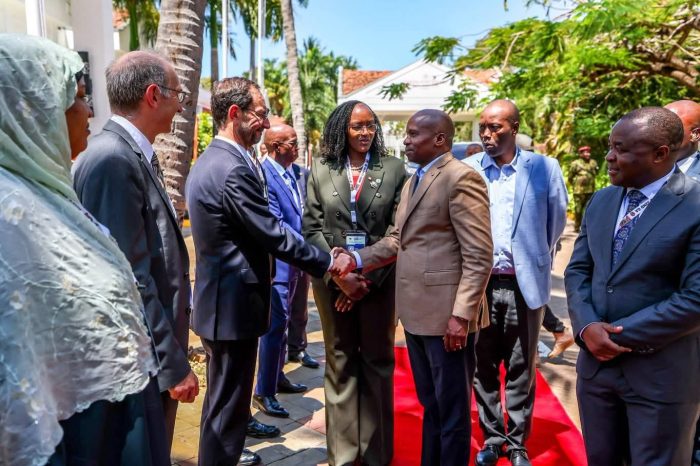
Kindiki said Africa could not fully benefit from the African Continental Free Trade Area (AfCFTA) while products were subjected to different regulatory requirements after crossing national borders.
“A cement bag tested in Nairobi and retested in Lagos is wasteful duplication. This is a tax on African enterprise,” Kindiki said during the official opening of the 32nd General Assembly of the African Organisation for Standardisation (ARSO) in Mombasa.
He said Africa’s market of about 1.4 billion people, with a combined gross domestic product of $3.4 trillion, presented enormous opportunities for businesses, but remained fragmented into 54 regulatory systems.
“Standards are an invisible and indispensable infrastructure,” he said, warning that even the best ports could become warehouses for goods destined nowhere if standards remained unharmonised.
Kindiki said harmonising standards and establishing mutual recognition of certification would reduce duplication and allow products that have been credibly certified in one African country to access markets across the continent.
He described economic freedom as Africa’s remaining frontier of liberation, saying trade was central to achieving greater economic sovereignty.
The Deputy President’s remarks came as ARSO delegates pushed for faster adoption of harmonised standards to support intra-African trade. ARSO Secretary General Dr Hermogene Nsengimana said the organisation’s council had approved 214 harmonised standards, covering 28 per cent of tariff lines, while more than 350 products have already been certified with the ARSO Quality Mark.

Kenya Bureau of Standards Managing Director Esther Ngari said the challenge was to make the trust attached to certification portable across borders.
“A product should not lose the credibility it has earned simply because it has crossed the border,” Ngari said, describing certification as a potential “passport for trade”.
She said standards, conformity assessment and accreditation must work together to ensure that manufacturers, regulators and consumers can trust the same quality systems across countries.
Investment, Trade and Industry Cabinet Secretary Lee Kinyanjui said intra-African trade remained at about 17 per cent, compared with around 70 per cent in Europe, making it necessary for African countries to address barriers within their own markets.
Kinyanjui said small and medium-sized enterprises also needed access to certification if they were to expand beyond their domestic markets.
International Organisation for Standardization Secretary General Sergio Mujica said the implementation of the Kigali Agreement between ISO and ARSO would be critical in strengthening mutual recognition and aligning African standards with international benchmarks.
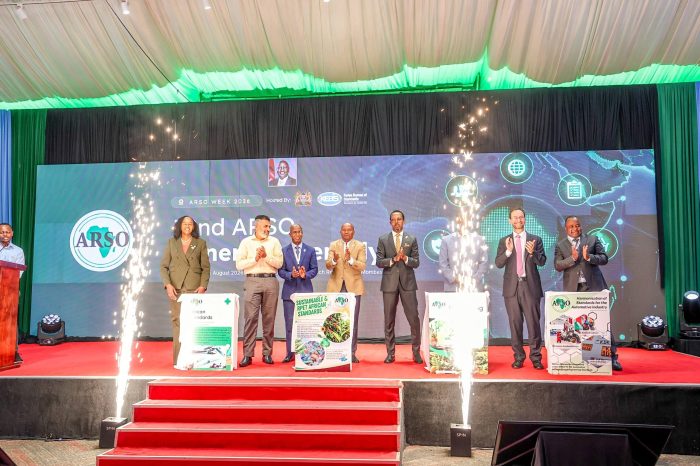
Mujica said the agreement provided an opportunity for African experts to play a greater role in international standardisation, but called for practical pilot projects to move the agreement from paper to implementation.
Kindiki urged the assembly to focus on accelerating harmonisation, strengthening mutual recognition, empowering MSMEs, promoting “Made in Africa” products and eliminating unnecessary trade friction.
He also announced that Kenya would host the 2028 ISO annual meeting in Nairobi and pledged land for the construction of a permanent ARSO headquarters in the capital.
The 32nd ARSO General Assembly is being held in Mombasa under the theme “Standards Enabling Intra-Africa Trade under the AfCFTA – One Certificate Working for You”, bringing together over 400 participants from 58 countries from Africa and beyond.