



African countries are being urged to harmonise technical standards and adopt a single certification system to ease the movement of goods across borders and boost intra-African trade.
The call was made during the 32nd General Assembly of the African Organisation for Standardisation (ARSO), being held in Mombasa, where experts are discussing ways of removing technical barriers to trade.
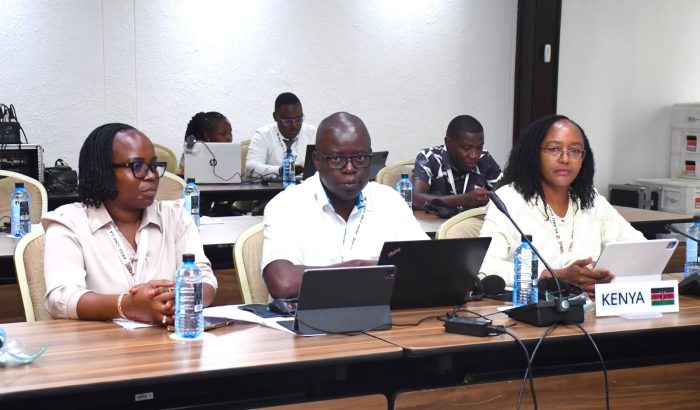
Kenya Bureau of Standards (KEBS) Managing Director Esther Ngari said harmonised standards would ensure products tested and certified in one African country can be accepted in other markets without undergoing repeated testing.
“This means that once a certificate is issued in one country, the products can be able to cross over the borders without having to be retested again,” Ngari said.
She said repeated testing currently increases costs for traders and delays the movement of goods, despite Kenya and other African countries already having systems for certifying products.
Ngari said Kenya’s experience within the East African Community demonstrates the potential benefits of harmonised standards, adding that the African Continental Free Trade Area (AfCFTA) presents an even larger market for Kenyan businesses.
She said the implementation of harmonised ARSO standards would allow a product tested in Nairobi to access markets across Africa, including South Africa, Ghana and Morocco, using the same certification.
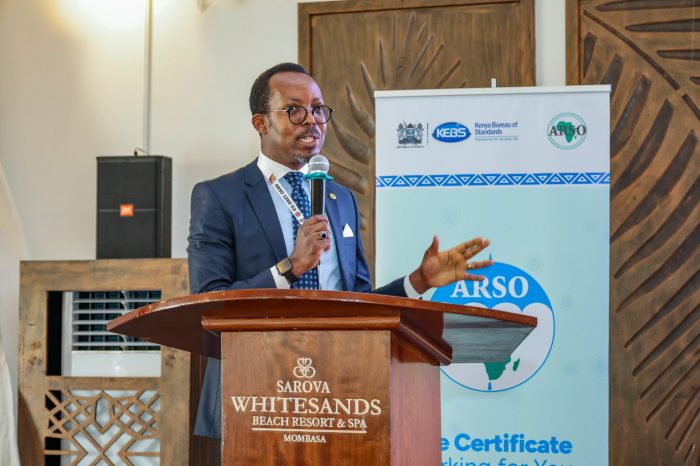
ARSO Secretary General Dr Harmogene Nsengimana said the organisation has so far harmonised more than 2,700 standards, while standards covering 28 per cent of tariff lines submitted under AfCFTA have been addressed.
“We want to realise our motto of one standard, one test, one certificate accepted everywhere,” said Dr. Nsengimana.
The ARSO Secretary General, however, said having harmonised standards is not enough unless countries have the capacity to implement them.
He pointed to the need to strengthen testing facilities and laboratories across the continent to support conformity assessment and certification.
ARSO has also begun rolling out the Africa Quality Mark, with nine countries already participating and another 10 in the pipeline, bringing the number to 19 of Africa’s 54 countries involved in the initiative.
The ARSO Secretary General said the organisation is initially prioritising sectors such as agro-processing, with automotive, pharmaceuticals, transport and services, textiles and leather also being targeted.
He said 10 African countries are yet to join ARSO, despite a 2014 resolution by African heads of state calling for all countries to become members.
Nsengimana said full membership was important because countries participating in AfCFTA need to work within the continental standards framework to ensure consistency and avoid double testing and certification costs.
Zambia Bureau of Standards Executive Director Nathan Sing’ambwa, who chairs the ARSO Champions, said member states must not only adopt harmonised standards but also apply them domestically.
He said this would help eliminate technical barriers to trade and make African products more competitive.
Sing’ambwa urged manufacturers, including small and medium-sized enterprises, to embrace standards, arguing that compliance should be viewed as an investment in product quality rather than an additional cost.
“Standards are not adding cost but adding value to your product,” he said.
He said products that meet recognised standards are better positioned to compete both locally and in international markets.
The ARSO discussions in Mombasa are therefore focused on strengthening a common standards framework that can support AfCFTA and make it easier and cheaper for African businesses to trade across the continent.