





MOMBASA: The Kenya Bureau of Standards (KEBS) has challenged public and private institutions to move beyond isolated quality certifications and adopt integrated management systems as a strategy for driving performance, trust, and national competitiveness.
Speaking during the 6th Annual Management Representatives and Auditors Conference in Mombasa, KEBS Managing Director Esther Ngari said excellence in modern organisations is no longer achieved through individual departments working in silos, but through coordinated systems that link quality, governance, safety, risk management, and information security.

The conference, held in Mombasa, brought together management representatives and auditors from across the country under the theme “Synergy in Systems: Coordinating for Excellence, Auditing for Impact.”
Ngari said the conference has evolved from a technical forum into a strategic platform for leadership and institutional improvement, noting that previous editions focused on building and sustaining quality culture, while this year’s event is centred on achieving synergy across systems.

“Quality is not an event or a certificate. It is a mindset that must shape how institutions govern, make decisions and deliver value,” she said.
She emphasised that audits must also evolve from being exercises in compliance to tools that drive improvement and accountability.
According to the KEBS boss, impactful auditing should identify risks early, assess how processes interact and promote learning rather than fear within organisations.
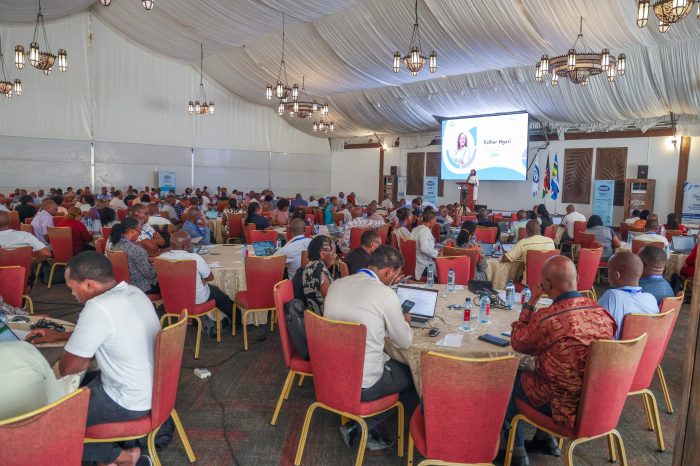
Ngari cited the International Organisation for Standardisation (ISO) guideline ISO 19011 as a reference framework for audits that go beyond verification, saying it should be applied as a leadership and governance tool.
On leadership, she pointed to Kabarak University as an example of how commitment to standards can translate into measurable results. She said the institution had earned several national and regional recognitions in 2025, including at the East African Regional Quality Awards and the Kenya Quality Awards.
Ngari added that quality management is central to Kenya’s economic growth agenda, arguing that the strength of systems in public institutions, universities, manufacturing, and small businesses would determine the country’s competitiveness.
She called on leaders to treat quality as a strategic function rather than an administrative task, and urged institutions to embrace digital transformation as a driver of transparency and good governance.

The conference also featured a leadership keynote by Kabarak University Vice Chancellor Prof. Henry Kiplangat, who addressed participants on the role of leadership in embedding standards across institutions.
Ngari urged participants to use the forum to exchange practical lessons and strengthen collaboration across sectors, stating that the responsibility of management representatives and auditors goes beyond compliance to safeguarding trust within organisations.
“Quality is not what we do when the auditor visits. It is who we are, every day,” she said.
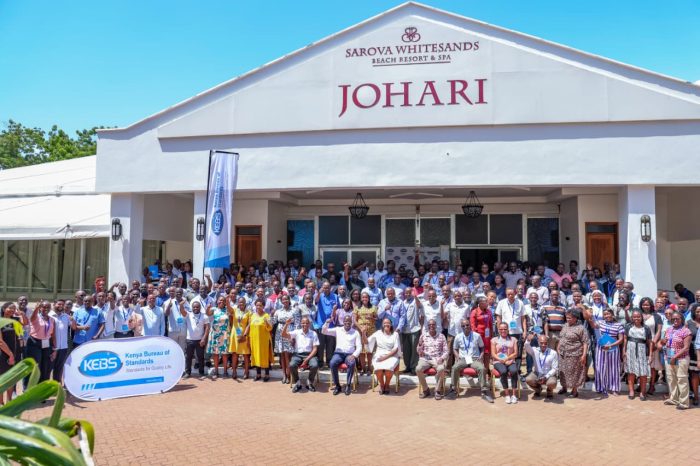
This year’s conference pulled in over 300 delegates from the public and private sector including government institutions and agencies. It sldo included delegates from Uganda, Tanzania, and Ghana.