


The public and private sectors have been called on to adopt Gender-Responsive Procurement.
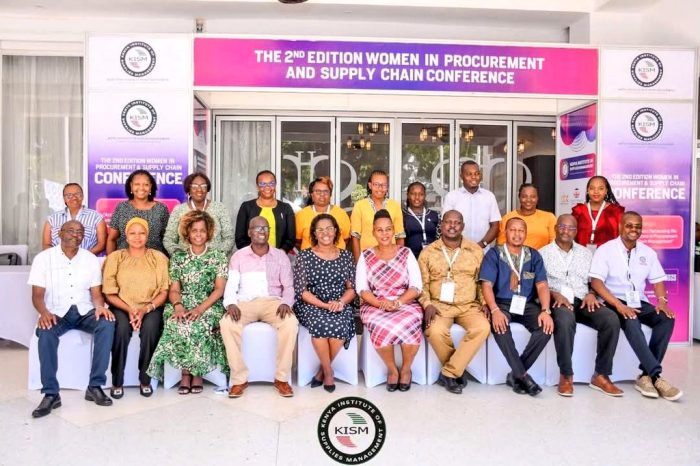
While officially opening the 2nd Women in Procurement and Supply Chain Management Conference in Mombasa, Gender and Affirmative Action Principal Secretary Anne Wang’ombe said adopting Gender-Responsive Procurement in both public and private sectors will ensure women-led and women-owned businesses are central in economic growth.
“The theme of this year’s conference “Accelerate Action; Harnessing the Potential of Women in Procurement and Supply Chain Management” is particularly a powerful call to action, urging stakeholders to move beyond rhetoric and implement concrete strategies to empower women in procurement and supply chain management,” said PS Wang’ombe.
“It recognizes that doing so is not only a matter of justice but also a crucial step towards building a more prosperous and equitable future. A robust and efficient supply chain is the backbone of any nation’s economic growth and development,” she added.
Wang’ombe said women in supply chain management bring resilience, innovation and strategic vision into entrepreneurship- enhancing access to economic opportunities.
“As we gather here, we are united by a shared commitment: to create a world where gender equality is not just an aspiration but a lived reality, and where every woman has the opportunity to thrive as an entrepreneur, leader, and worker,” said the Gender and Affirmative Action PS.
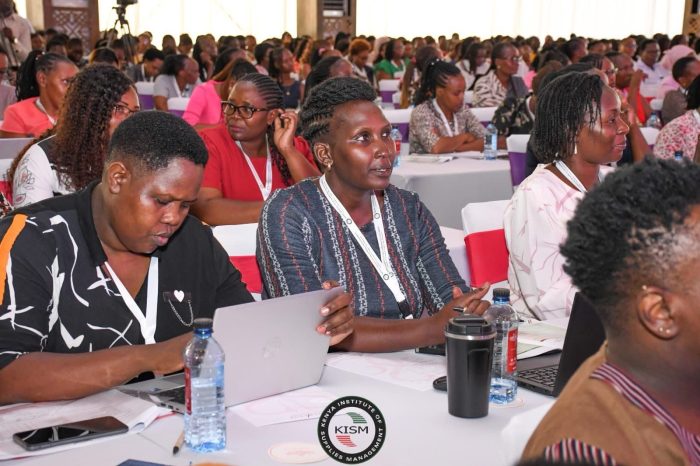
According to the PS, the 2nd WiPSC conference was a critical step towards ensuring that the constitutional mandate for gender parity becomes a living reality, driving innovation and efficiency across all industries
Wang’ombe added that achieving gender parity was not merely a matter of fairness but a strategic imperative that strengthens the economy, enhances governance, and builds a more equitable and prosperous nation.
By empowering women within the procurement and supply chain sectors, the country not only unlocks their immense potential but also catalyse broader economic growth and societal advancement.

At the conference, KISM Chair John Karani said there was a need to create more business opportunities for women.
“Building upon the insights and outcomes of our inaugural conference, themed ‘Raising the Bar: ‘Enhancing inclusion, business opportunities and leadership for women in procurement and supply chain’, we have meticulously designed a program that addresses the critical challenges and unlocks the immense potential of women in this dynamic field,” said KISM Chair John Karani.
During this year’s conference, KISM aims to harness women’s potential and forge partnerships and initiatives that provide tangible pathways for women entrepreneurs and professionals to thrive.
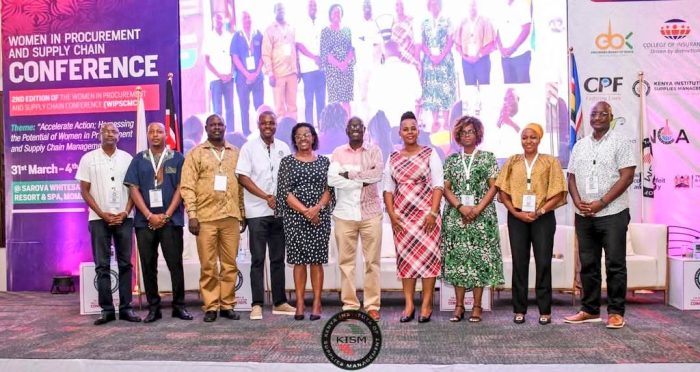
“This evolution from awareness to action is crucial. Last year’s conference successfully raised the bar, setting a benchmark for progress. Now, this year’s event aims to propel the industry forward, translating awareness into measurable outcomes,” said Karani.
“Moreover, the conference is anticipated to elevate the visibility of women’s contributions, challenging existing stereotypes and inspiring future generations. Ultimately, the goal is to see a real and noticeable increase in the presence of women in high-level positions within the procurement and supply chain sector, alongside increased funding and support for women-led initiatives,” he added.

This year’s WiPSC conference’s goal is to bridge existing gender gaps in the industry by empowering women, enhancing their leadership skills, business opportunities and creating supportive communities around them.
“Our desire from this Conference will act as a powerful catalyst, driving organizations to fundamentally reassess and prioritize diversity and inclusion within their procurement and supply chain teams,” said KISM CEO Kenneth Matiba.
“The discussions will illuminate the systemic barriers that have historically impeded women’s advancement in the industry. It will also significantly advance the representation, influence, and leadership of women in procurement and supply chain management. This will be achieved through a multi-faceted approach,” he added.
Meanwhile, Kilifi Deputy Governor Flora Mbetsa Chibule has called on the public and private sectors to shun outdated systems holding women in business back.
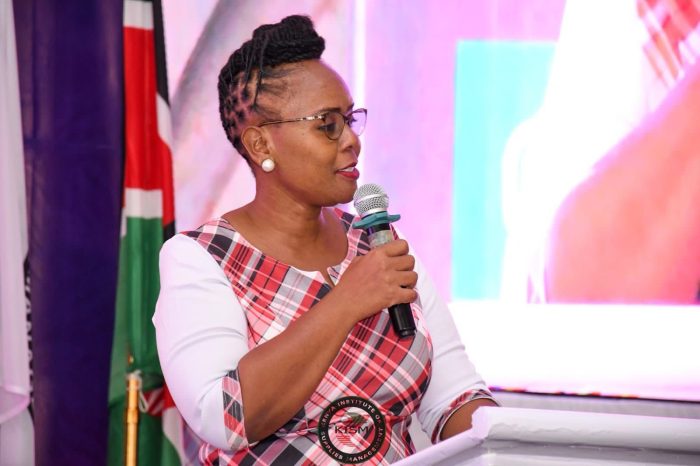
“In Kilifi, I’ve seen women who don’t have formal titles, but they are running local logistics, aggregating produce, managing school feeding programs, supplying goods to hospitals—quietly powering the system. And they’re doing this with grit, with creativity, and often with very little support,” said Kilifi DG Flora Chibule.
The DG said the challenge is not always policy but access, which is still guarded.
“Honestly speaking, if women still need “connections” or to “know someone” to access opportunities, then we are not running a system. We are running an exclusive club. That’s not okay. We must commit to dismantle it,” said Chibule.
“If we want real progress, we must fix the entire ecosystem. Not just the laws, but the logistics, the financing, the digital infrastructure, and most importantly, the trust in the system,” she added.
She emphasized the need for building structures that support women.
“What we need to do is stop blocking the door. Stop with the systemic biases, the lack of equitable opportunities, and the unconscious hurdles that hinder their advancement,” said Chibule.
“We need to actively remove the obstacles that stand in their way, not just offer well-meaning encouragement. Because resilience isn’t just about individual strength; it’s about systemic change. And that change starts with us,” added the Kilifi DG.
Mbetsa concluded by saying it was important to build a Kenya where a woman winning a tender isn’t treated as groundbreaking news, but simply the norm.