


Huawei, UNESCO, and government partners have officially completed Phase II of the Kenya DigiSchool Connectivity Project, bringing Internet access to 21 schools, including six institutions catering to children with special educational needs.
This initiative aligns with Kenya’s Digital Superhighway Agenda, which aims to connect all schools nationwide to the Internet. The project is a collaborative effort involving Kenya’s Ministry of Education, the Ministry of ICT and Digital Economy, Kenya Power (KPLC), UNESCO, and Huawei’s TECH4ALL initiative.
The milestone was announced on March 14 at Machakos Primary School for the Deaf, one of the newly connected schools under Phase II. The event was officiated by Eng. John Tanui CBS, Principal Secretary for the State Department of ICT and Digital Economy.
“We are here at Machakos School for the Deaf to ensure students can access the national fiber network, improving their learning experience and outcomes. Since visual access is crucial for the deaf, we have also provided a video conferencing solution,” said Eng. John Tanui.
Recognizing the importance of public-private collaboration, he added:
“This is a transformative initiative, made possible by strategic partnerships with Huawei and UNESCO. Together, we are shaping a future of digital inclusion.”
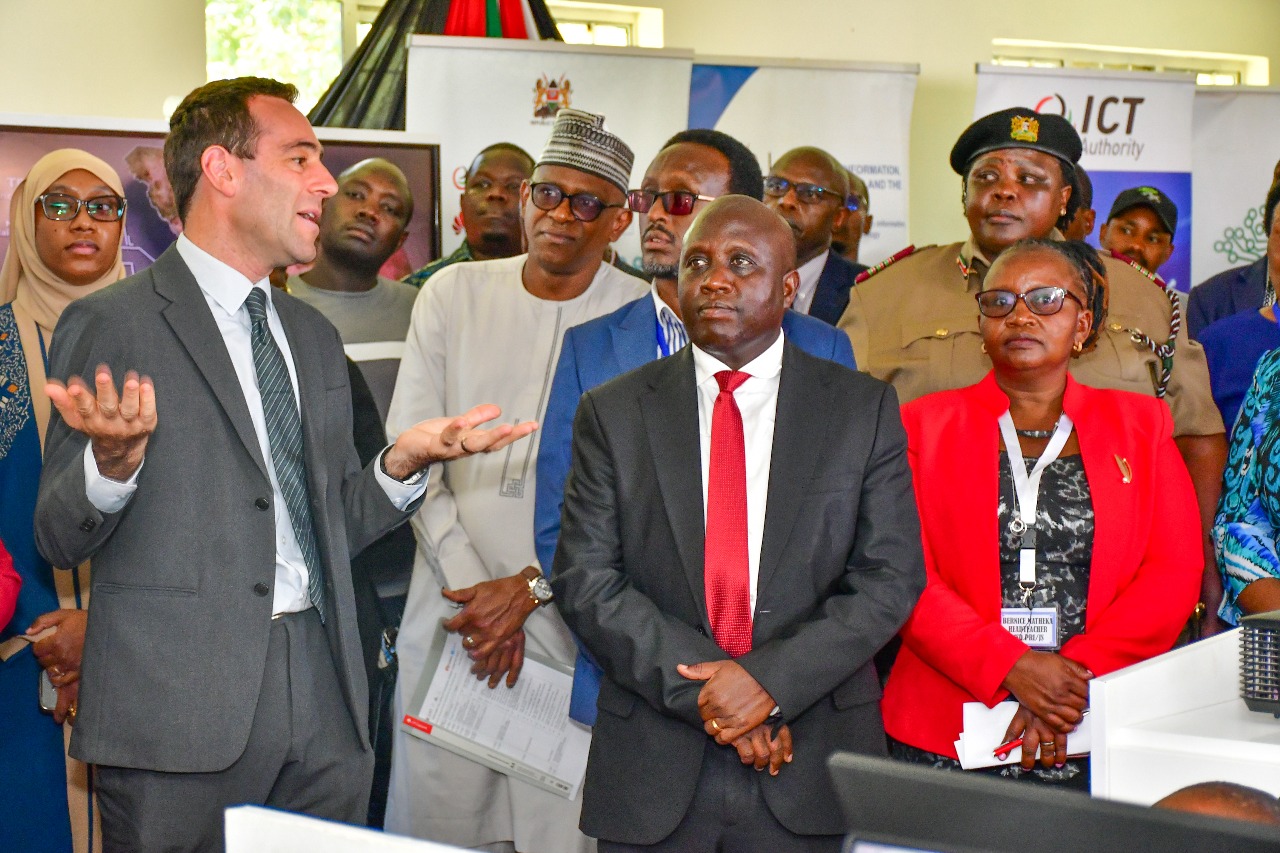
A key component of the project is video conferencing technology, enabling the Kenya Institute of Special Education (KISE) to offer remote support to teachers, administrators, and students in deaf schools. This enhances teaching quality and accessibility to specialized services.
Stephen Zhang, Deputy CEO of Huawei Kenya, highlighted the broader impact of connectivity:
“Internet access is revolutionizing education—making school management more efficient, unlocking vast online learning resources, and creating more engaging classrooms. For special needs schools, it also facilitates remote assessments and rehabilitation services.”
At the event, attendees experienced first-hand how students use the Internet for interactive learning and real-time video sessions with KISE experts.
Louise Haxthausen, Director of UNESCO’s Regional Office for Eastern Africa, emphasized the organization’s dedication to equitable education:
“UNESCO is committed to working alongside the Government of Kenya, Huawei, and all stakeholders to ensure inclusive, high-quality education, in line with Sustainable Development Goal 4 and Kenya’s National Education Sector Strategic Plan.”
Since its inception, Huawei’s DigiSchool Connectivity Project has played a crucial role in providing high-speed, all-optical Internet to schools, using its FTTR-B technology and the government’s NOFBI fiber-optic network.
Phase I connected 13 schools, benefiting 6,000 students and teachers.
Evaluations showed 98% of learners found the Internet useful for their education, 84% felt it made learning more engaging, and 71% found online resources helpful in understanding complex concepts.
Now, with Phase II complete, even more schools have access to high-speed Internet, paving the way for a more connected and inclusive education system in Kenya.